
Introduction
Khula Process in Rawalpindi Family Court is the legal method through which a woman can seek separation from her husband under Pakistani family law. When a marriage becomes difficult to continue and reconciliation is not possible, a woman has the right to approach the family court and request khula. The court reviews the situation and if it determines that the marriage cannot continue peacefully, it may grant the dissolution of marriage.
Many women in Rawalpindi are not fully aware of how the Khula Process works or what legal steps they need to follow. Understanding the procedure can help avoid delays and confusion. Family courts in Rawalpindi handle many khula cases every year, and with the proper legal guidance the process can become much easier and faster for the applicant.
Legal Meaning of Khula in Pakistani Law
In Pakistani law, khula refers to the right of a wife to seek the dissolution of marriage through the court when she is unable to continue living with her husband. The Khula Process is recognized under the Muslim Family Laws and handled by family courts across Pakistan. Unlike talaq, which is initiated by the husband, khula allows the wife to legally end the marriage with the help of the court.
Usually the court asks the wife to return the haq mehr or any agreed financial settlement, but the final decision depends on the circumstances of the case. Judges often encourage reconciliation between the couple first, but if reconciliation fails the court proceeds with the khula case.
Steps of the Khula Process in Rawalpindi
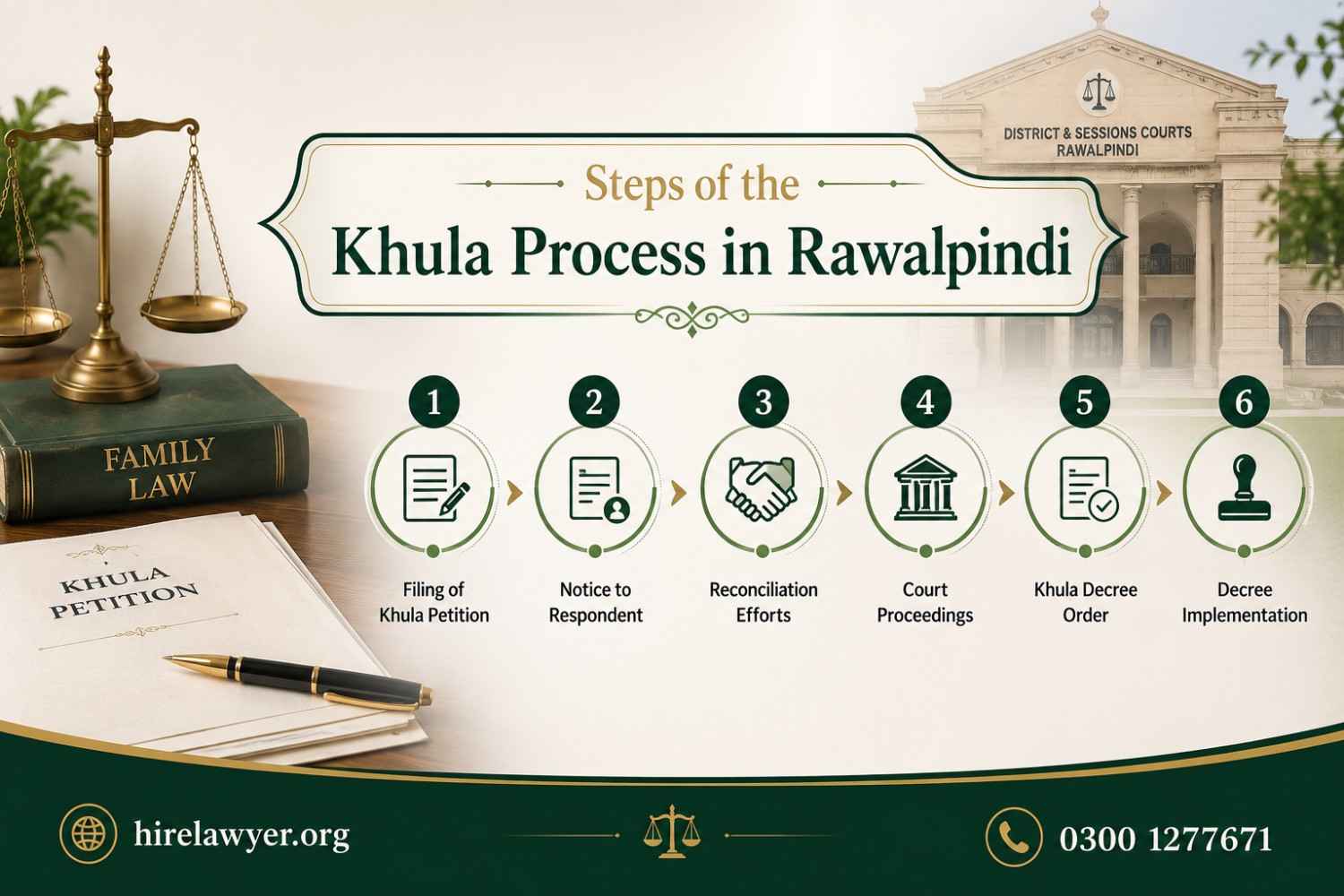
The Khula Process in Rawalpindi begins when the wife files a khula suit in the family court through a lawyer. The application includes details about the marriage, reasons for seeking khula, and basic personal information about both parties. After the petition is submitted, the court issues a notice to the husband.
Once the notice is delivered, the court schedules a hearing. During the hearing, the judge may attempt reconciliation between the husband and wife. If reconciliation is unsuccessful and the wife insists that she cannot continue the marriage, the court usually proceeds with granting the khula decree. After the decree is issued, the marriage is legally dissolved.
Documents Required for Khula Case
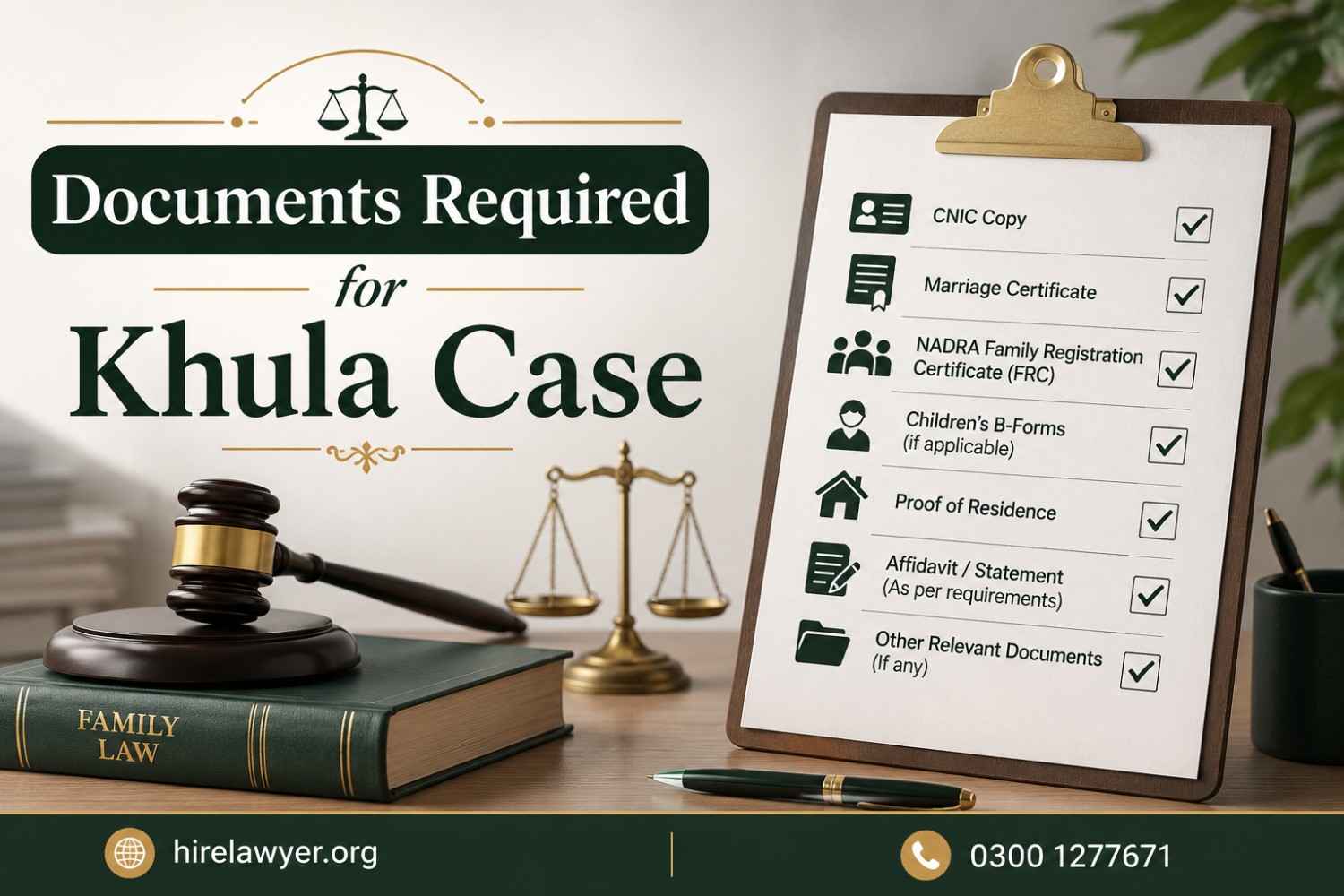
To start the Khula Process in Rawalpindi Family Court, certain documents are normally required. These include a copy of the marriage certificate (Nikahnama), the CNIC of the wife, and details of the husband such as his address. These documents help the court verify the marriage and begin the legal proceedings.
In some cases, additional documents may be required depending on the situation. A lawyer usually prepares the case file and ensures that all required documents are properly submitted to the court so the khula proceedings can move forward smoothly.
How Long the Khula Process Takes

The duration of the Khula Process can vary depending on the court schedule and whether the husband appears in court. In many cases in Rawalpindi, khula cases are resolved within a few months if the legal procedure moves smoothly. If the husband does not appear or delays the process, the court can still proceed and decide the case.
Having an experienced family lawyer can help ensure that the case is handled efficiently. Proper legal guidance helps in preparing the petition correctly and attending hearings on time, which can significantly reduce delays in the process.
Conclusion
For individuals seeking legal guidance about the Khula Process in Rawalpindi Family Court, professional assistance can make the procedure easier and more organized. Advocate Abuzar Tariq, the owner of hirelawyer, is known for providing legal support in family law matters including khula, divorce, and other family court cases. With professional experience and understanding of family law procedures, he helps clients navigate the legal system with confidence.
The hirelawyer website also provides useful information and legal support for people searching for lawyers in Rawalpindi and Islamabad. Through hirelawyer, individuals can learn about different legal matters including the Khula Process, family disputes, and other court cases while also connecting with experienced lawyers who can assist them with their legal needs.
Comments