
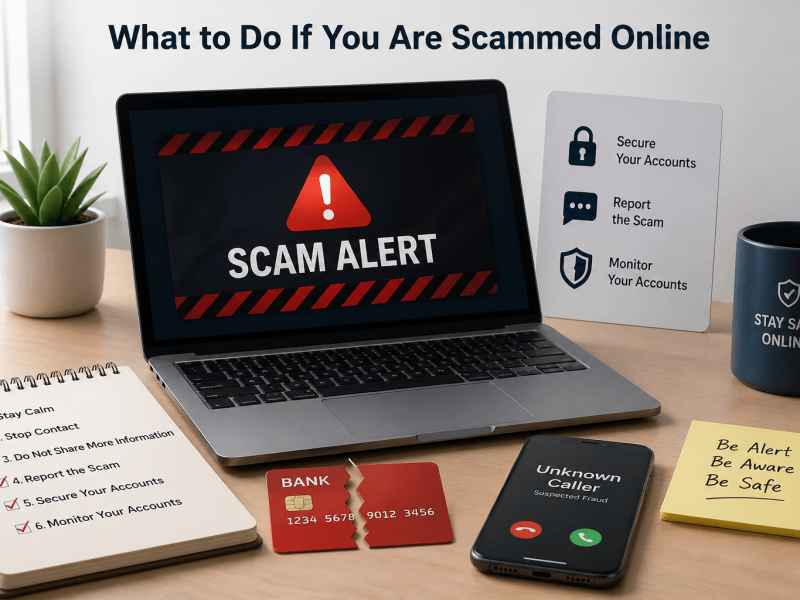
When the Internet Turns Into a Trap
The internet is a powerful tool that helps people shop, communicate, work, and manage finances with ease. However, the same digital world also allows scammers to create traps for unsuspecting users. Fake online stores, phishing emails, social media fraud, and investment scams are some of the common methods used by cybercriminals.
When someone realizes they have been scammed online, the first reaction is usually panic or confusion. Many victims do not know what steps to take next. The truth is that the way you respond in the first few hours can make a big difference in protecting your money and personal information.
The First Hour After Discovering the Scam
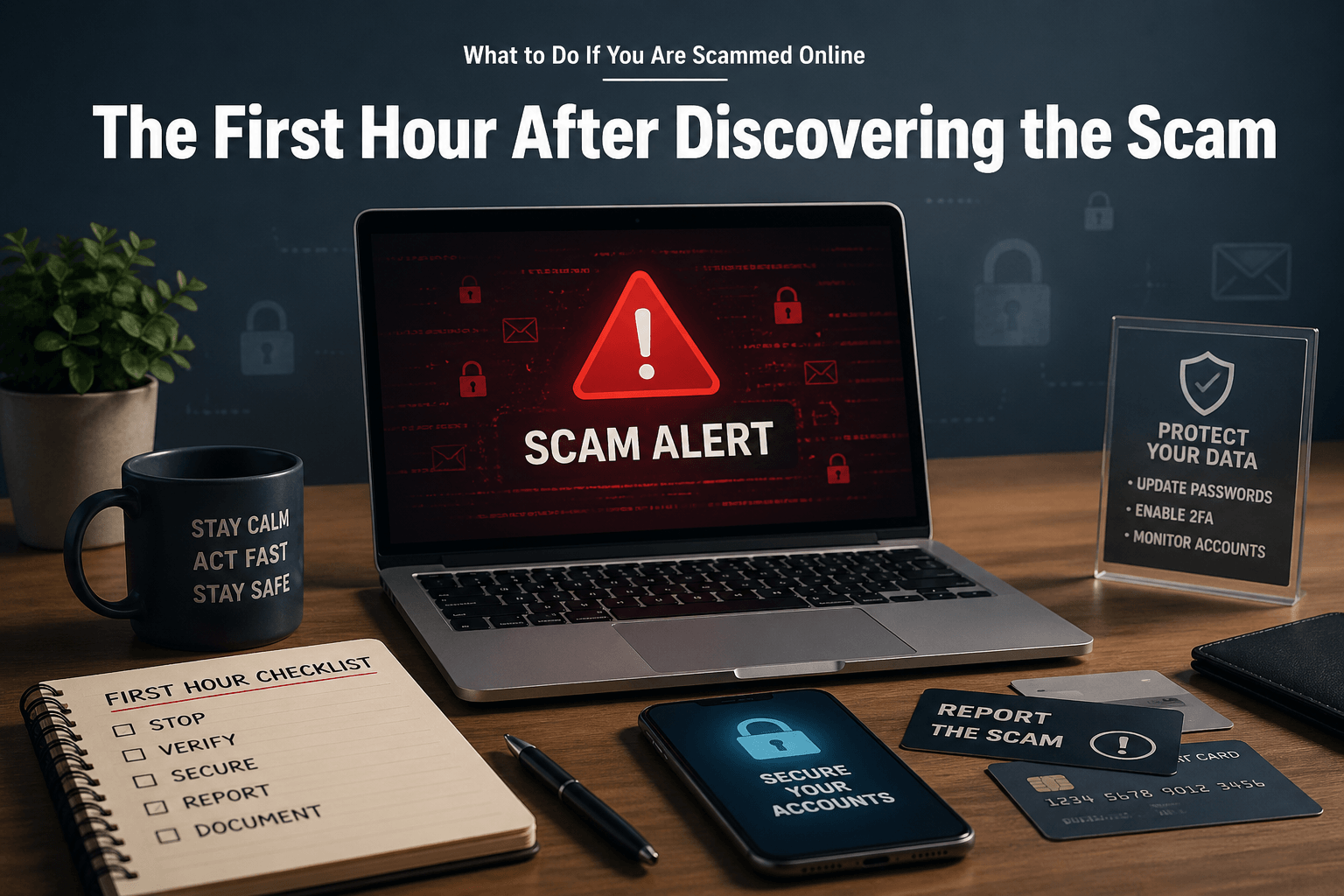
The moment you realize that you may have been scammed online, it is crucial to stop all communication with the scammer immediately. Do not send any more money and avoid responding to their messages. Scammers often create a sense of urgency or fear to pressure victims into making additional payments after being scammed online.
If the scam involved any financial transaction, contact your bank or payment service provider right away. Inform them that you have been part of a fraudulent activity so they can block your card, secure your account, or guide you through the reporting process. Acting quickly can sometimes help prevent further financial loss.
Protecting Your Digital Identity
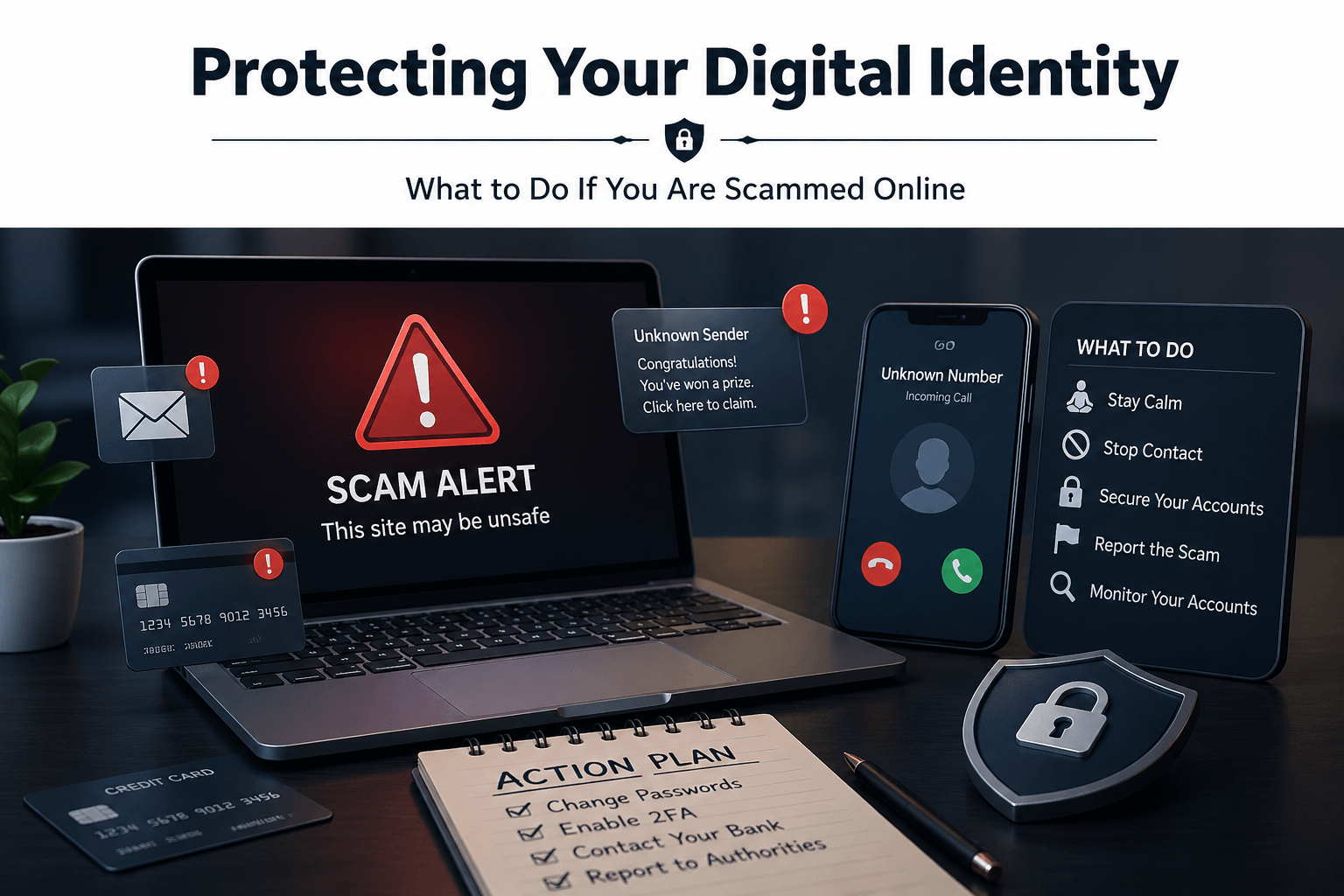
Online scams often involve more than just financial fraud. In many cases, scammers collect personal information such as passwords, identification details, or verification codes. This information can later be used for identity theft or unauthorized access to other accounts.
To protect yourself, change the passwords of important accounts as soon as possible. Start with your email account, banking applications, and social media platforms. Enabling two-factor authentication can also provide an extra level of security and make it harder for scammers to access your accounts, reducing future risks significantly.
Turning Evidence Into Protection
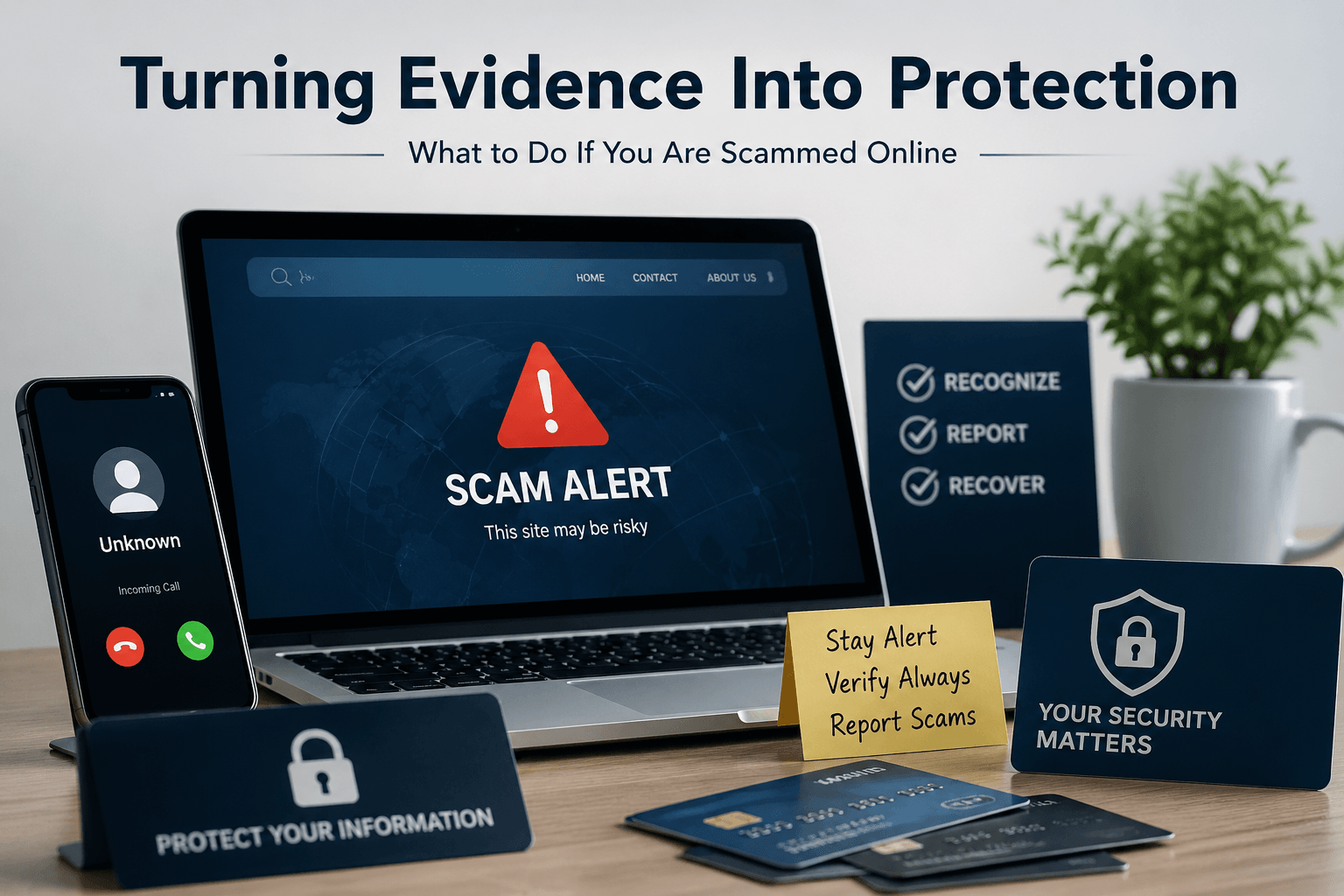
Many victims make the mistake of deleting messages or ignoring evidence after being scammed online. Instead, it is important to preserve every detail connected to the incident. Screenshots of conversations, emails, payment receipts, website links, phone numbers, and social media profiles can all serve as valuable proof after being scammed online.
Keeping this information well organized can be extremely helpful when reporting the case to the relevant authorities. Proper evidence increases the chances of identifying the scammer and strengthens any legal complaint you may choose to file. Additionally, maintaining backups and noting timelines of events can further support your case and improve the investigation process.
Speaking Up Against Online Fraud
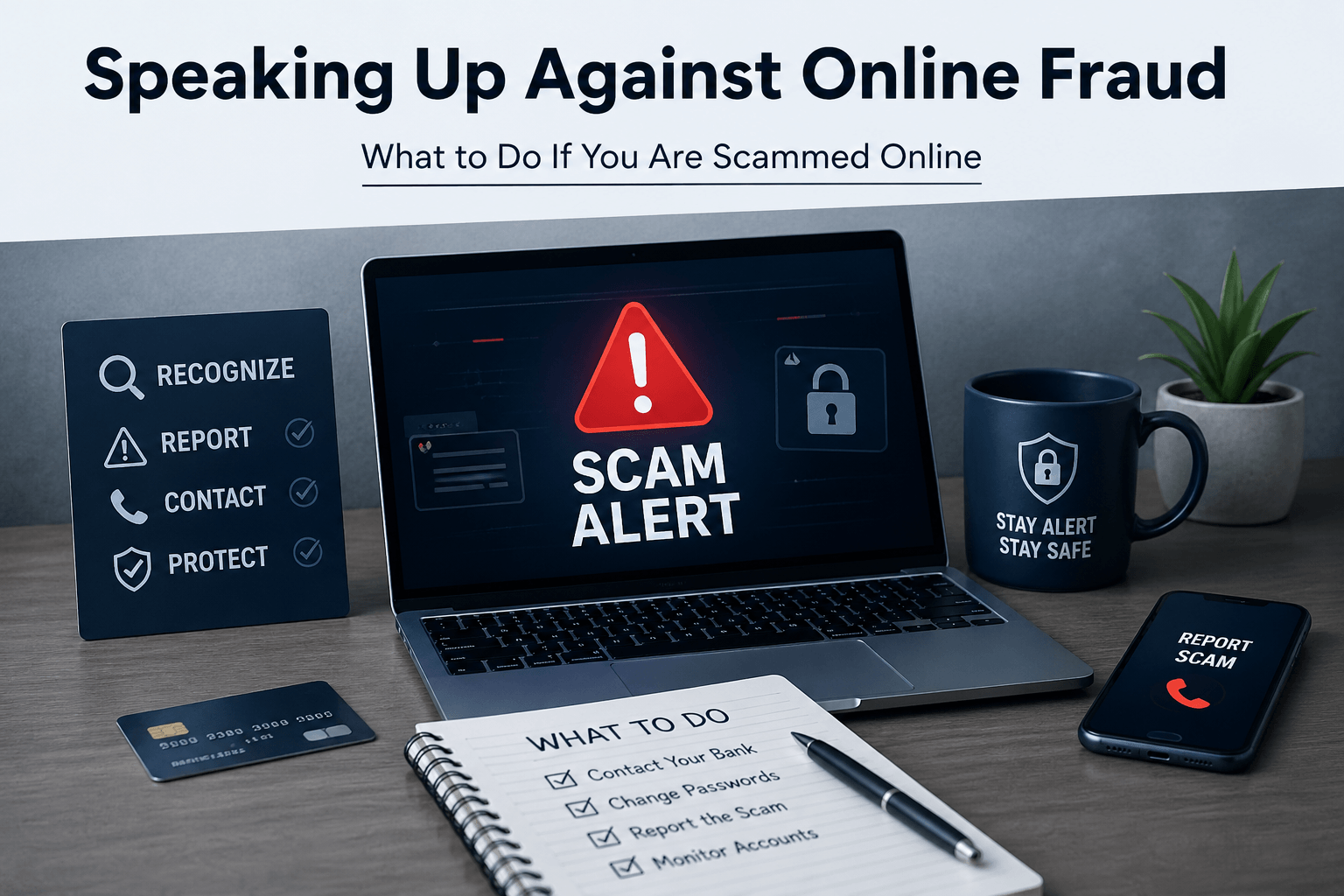
Reporting an online scam is an important step that helps both the victim and the wider community. In Pakistan, individuals who experience online fraud can file a complaint with the cybercrime wing of the Federal Investigation Agency (FIA). These authorities investigate cyber offenses such as hacking, online blackmail, financial fraud, and identity theft.
By reporting the scam, victims help authorities track cybercriminal activities and prevent similar incidents from happening to others.
Conclusion
Online scams are becoming more common as digital technology continues to grow. Anyone who uses the internet can potentially become a target. The key to dealing with such situations is staying calm, acting quickly, and following the right steps to secure your finances and personal information.
If someone faces a serious online scam or cybercrime issue, seeking legal guidance can be very helpful. Advocate Abuzar Tariq, the owner of HireLawyer, provides professional legal assistance in cybercrime and online fraud matters. Through the HireLawyer website, individuals can connect with experienced lawyers who guide them through legal procedures and help protect their rights.
Comments