
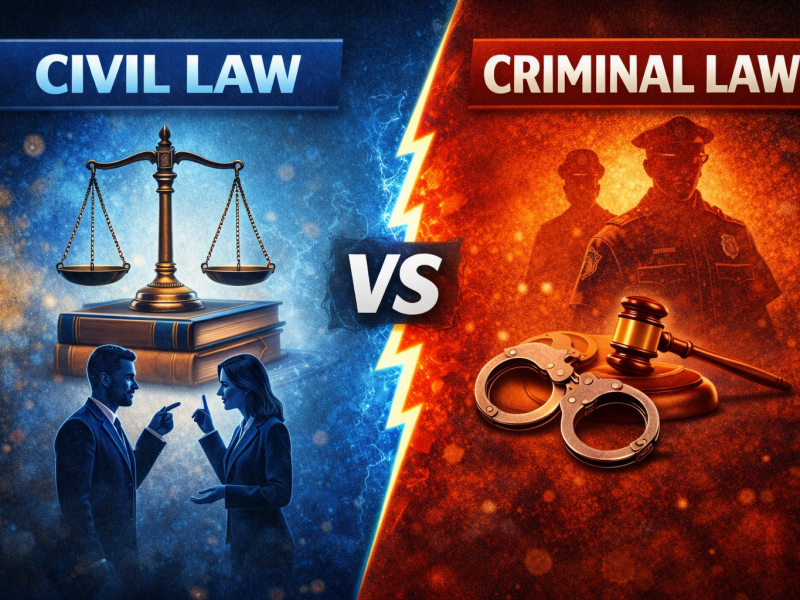
Civil Law and Criminal Law understanding of this is important for anyone who wants to understand how the legal system works. Both areas of law deal with disputes and legal issues, but their purpose, procedures, and outcomes are different. Civil law mainly focuses on resolving conflicts between individuals, businesses, or organizations, while criminal law deals with acts that are considered crimes against society and public order. Knowing the distinction between these two types of law helps individuals understand their legal rights and the appropriate legal process to follow when a dispute arises, and it also helps them make informed legal decisions when facing different types of legal problems.
1. What Is Civil Law? Understanding Its Purpose

Civil Law deals with disputes between individuals, businesses, or organizations where one party claims that another has caused harm or violated their rights. The main goal of civil law is to resolve conflicts and provide compensation or remedies rather than punish someone.
Common examples of civil cases include property disputes, contract disagreements, family law matters, and personal injury claims. In these cases, the person who files the case is called the plaintiff, while the party being sued is the defendant.
Courts handling civil law matters usually decide whether compensation, financial damages, or legal orders (such as injunctions) should be granted to resolve the dispute.
2. What Is Criminal Law? Protecting Society From Crime
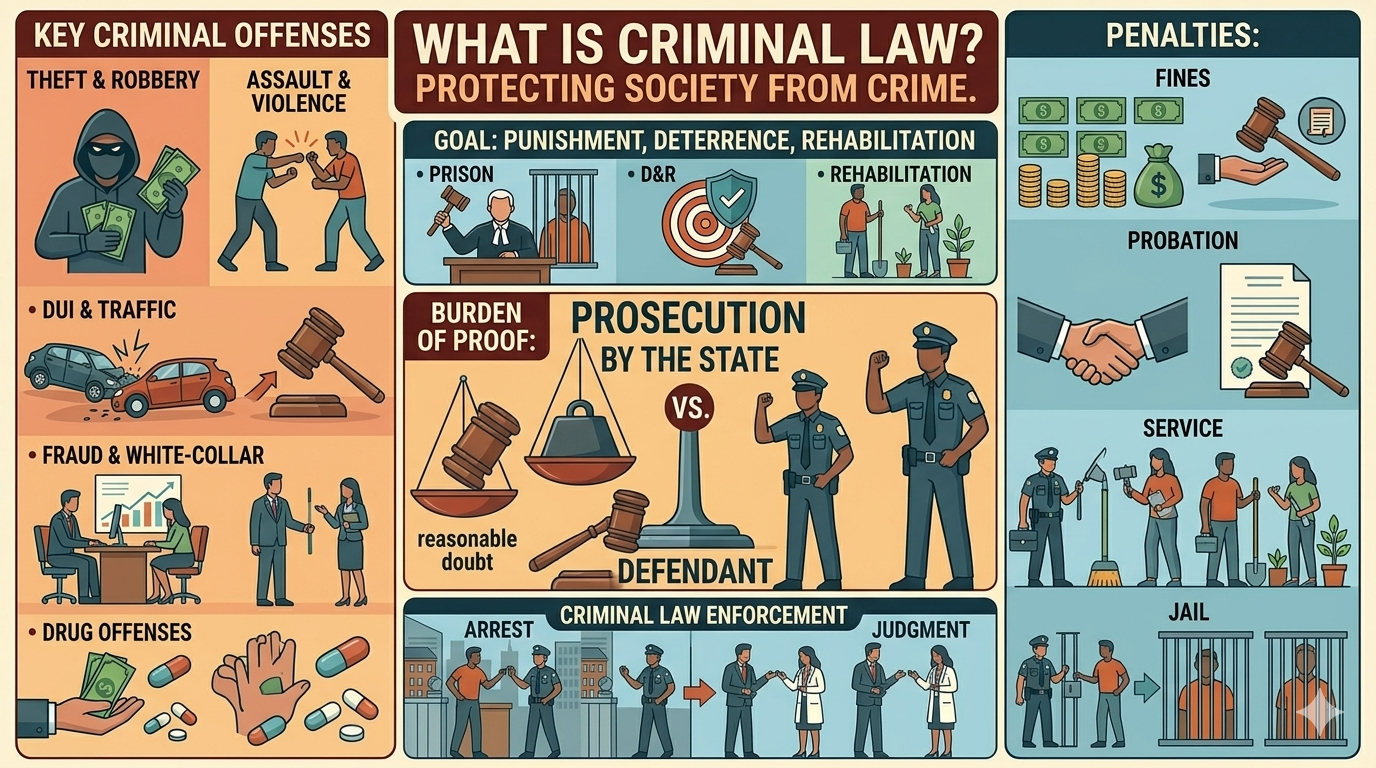
Criminal Law focuses on acts that are considered harmful to society as a whole. These cases involve offenses such as theft, fraud, assault, robbery, and murder, which are treated as violations against the state and public safety. Criminal law is designed to identify unlawful behavior, hold offenders accountable, and protect citizens from actions that may threaten their lives, property, or overall well-being.
In criminal cases, the government or state prosecutes the accused person because a crime is considered an offense against society, not just an individual victim. Law enforcement agencies investigate the matter, gather evidence, and present the case in court. If the accused person is found guilty, the court may impose penalties such as fines, probation, community service, or imprisonment, depending on the seriousness of the crime and the circumstances surrounding the case.
The purpose of criminal law is not only to punish offenders but also to maintain public order, ensure justice, and deter future crimes. By enforcing criminal laws and imposing penalties on those who break them, the legal system aims to create a safer society and discourage individuals from engaging in illegal activities.
3. Key Differences Between Civil and Criminal Law
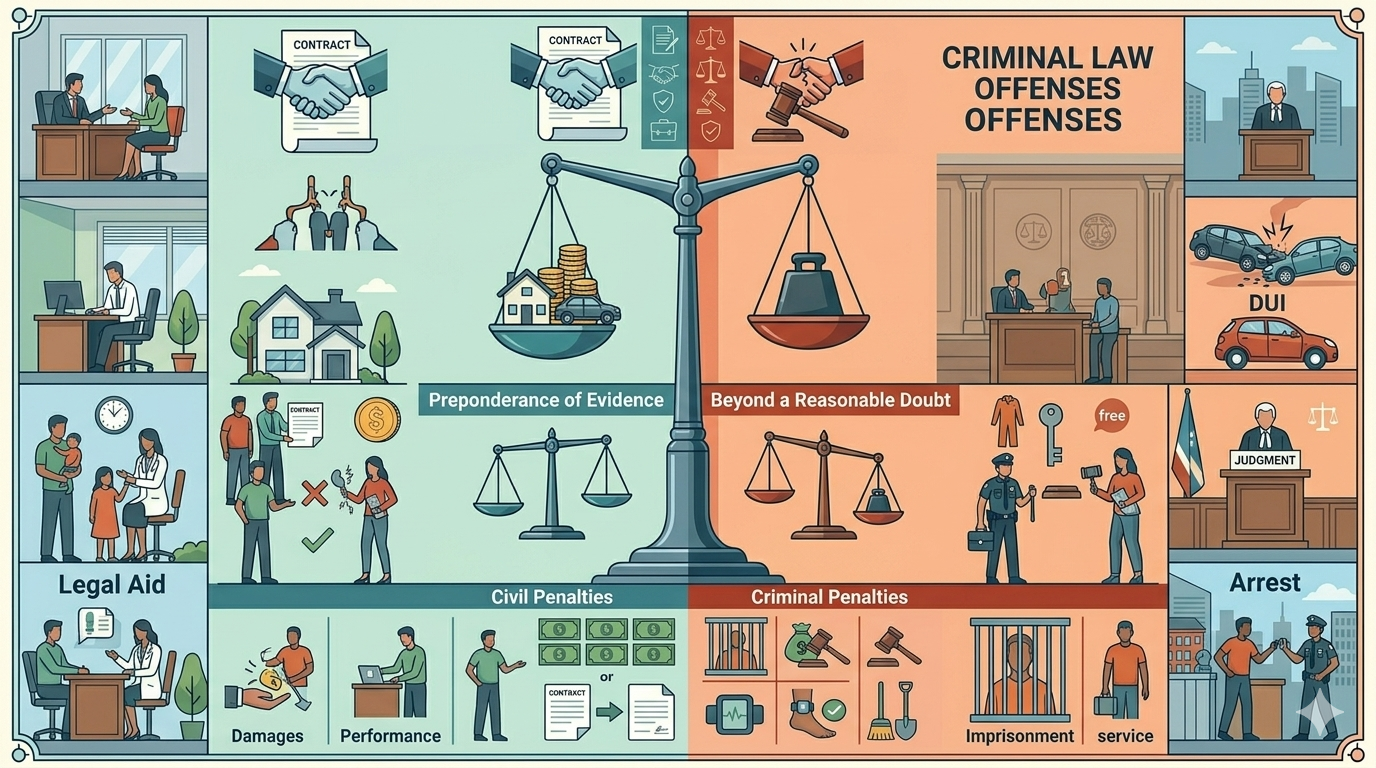
Although both branches of law are handled in courts, there are several important differences:
Purpose:Civil law resolves private disputes, while criminal law punishes crimes against society.
Parties involved:Civil cases are filed by individuals or organizations, whereas criminal cases are prosecuted by the state.
Outcome:Civil cases usually result in compensation or legal remedies, while criminal cases can lead to penalties such as imprisonment.
Burden of proof:Criminal cases require stronger proof because a person’s liberty may be at stake.
Understanding these differences helps people know which legal process applies to their situation.
4. Why Understanding Civil and Criminal Law Matters
Knowing the difference between civil and criminal law is important for anyone dealing with legal issues. It helps individuals choose the right legal path, protect their rights, and seek proper legal assistance.
Whether you are involved in a contract dispute, property matter, or criminal allegation, consulting a qualified lawyer can help you understand the legal process and take the correct steps.
For individuals and businesses alike, having basic knowledge of these legal systems can make it easier to navigate legal problems and find effective solutions.
Conclusion
Understanding the difference between civil and criminal law is crucial for anyone navigating the legal system in Pakistan. Civil law deals with disputes between individuals or organizations, such as property disagreements, contracts, or family matters, while criminal law involves offenses against the state or society, including theft, assault, or fraud. Advocate Abuzar Tariq, with his extensive experience in both civil and criminal cases, guides clients through these distinctions, ensuring they understand their rights and the proper legal procedures to follow. His expertise helps individuals make informed decisions about how to proceed with their cases, whether filing a civil suit or defending against criminal charges.
For those seeking reliable legal guidance online, HireLawyer provides a comprehensive platform where users can access professional advice on both civil and criminal matters. This article not only explains the key differences between civil and criminal law but also highlights how HireLawyer connects clients with verified lawyers, making it easier to resolve disputes or handle legal challenges efficiently. By combining clear explanations with practical resources, this guide empowers readers to navigate the legal landscape confidently while leveraging HireLawyer’s services for expert support.
Comments