
Introduction
Land Fraud and Property crimes are becoming increasingly common in today’s real estate market. Many unsuspecting buyers and owners fall victim to scams, fake documentation, or illegal land grabbing. Understanding the risks and taking proactive steps is crucial to protect your hard-earned assets. Ignorance or delay in verifying property details can lead to severe financial and legal consequences.
In Pakistan, property-related disputes often involve forged documents, fake sales, or disputes over inheritance and registration. Being alert and informed can save you from lengthy legal battles and monetary loss. Consulting legal experts and staying updated on property laws ensures that you stay one step ahead of fraudsters.
Understanding Land Fraud and Property Scams
Land fraud and property scams come in many forms, such as fake ownership documents, illegal sales, or land grabbing schemes. Scammers often target properties in urban and rural areas, exploiting gaps in registration or verification processes. Being aware of common tricks, like fake mutation papers or false encumbrance certificates, is the first step in prevention. Always verify ownership details at local land revenue offices before making any financial commitments.
Verification and Legal Measures
Proper verification of land and property documents is essential. Ensure that the property has a clear title, no ongoing disputes, and verified ownership records. Hiring a qualified lawyer can help you examine agreements, contracts, and registration papers carefully. Legal experts also guide you on avoiding fraudulent middlemen or sellers who may present forged documents. These measures minimize the risk of falling victim to land fraud and property theft.
Signs of Potential Fraud
One unique approach to preventing land fraud and property crimes is to use a bulletin or checklist of red flags. Watch for sudden price drops, pressure to sign documents quickly, or untraceable ownership records. If a property has multiple past owners within a short period, or the seller cannot provide original documents, consider it a warning. Reporting suspicious activities immediately to authorities can prevent serious financial loss.
Online Tools and Public Records
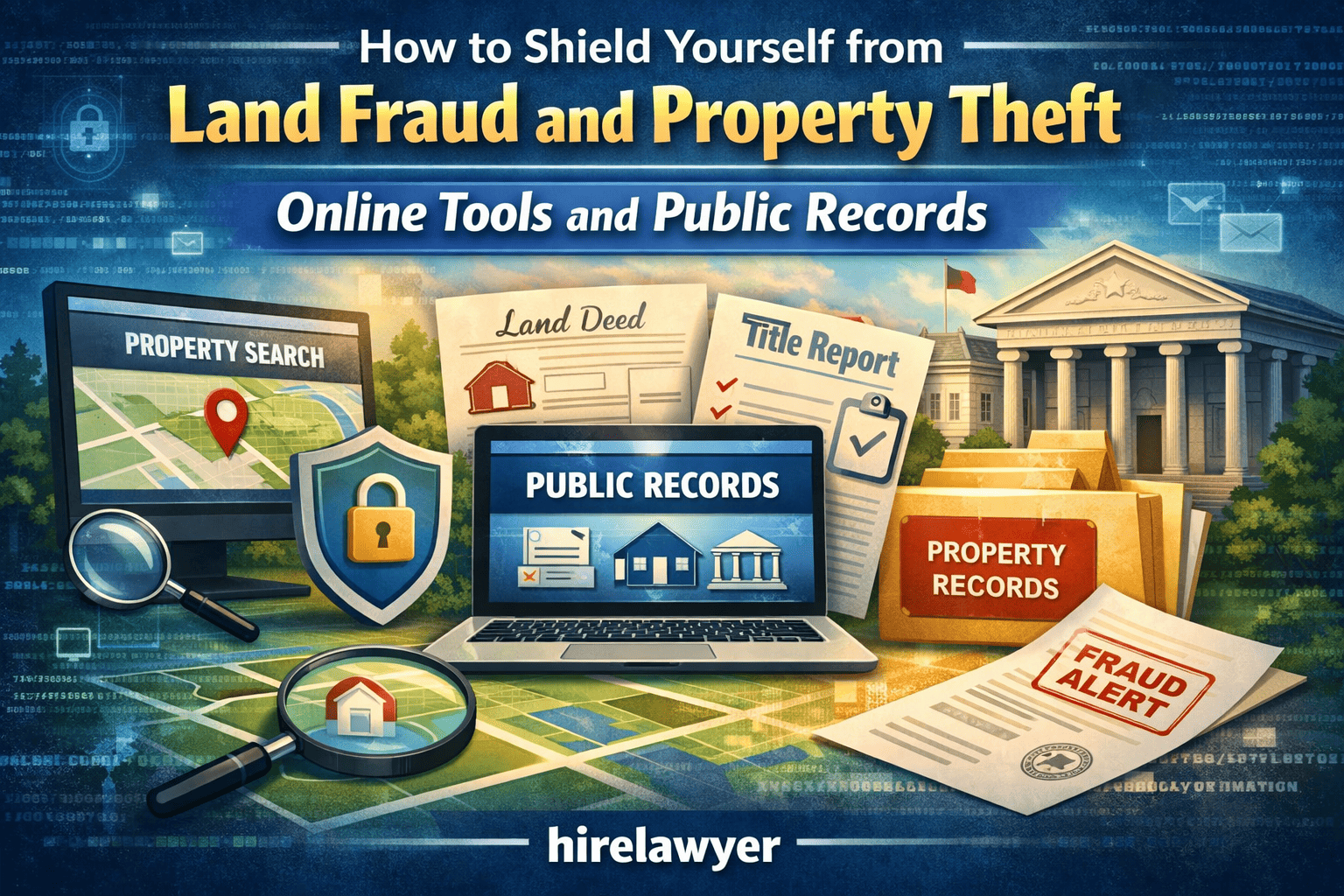
In the digital age, several online tools help verify land and property ownership. Government land portals, municipal records, and official databases can confirm ownership and past transactions. Using these resources reduces reliance on unverified information and ensures that your property investment is secure. Staying informed about online verification procedures is key to safeguarding your property from fraud.
Conclusion
When dealing with land fraud and property disputes, having expert legal support is invaluable. Advocate Abuzar Tariq, owner of hirelawyer, has years of experience in assisting property owners and buyers in navigating complex property laws. His guidance ensures that clients can protect their assets, avoid fraudulent transactions, and resolve disputes efficiently.
Hirelawyer’s website provides comprehensive resources for understanding property laws, verifying ownership, and accessing professional legal advice. The platform combines practical tips with expert consultation, making it easier for individuals to shield themselves from land fraud and property crimes. By leveraging these tools, property owners can take proactive steps to secure their investments and avoid costly mistakes.
Comments